
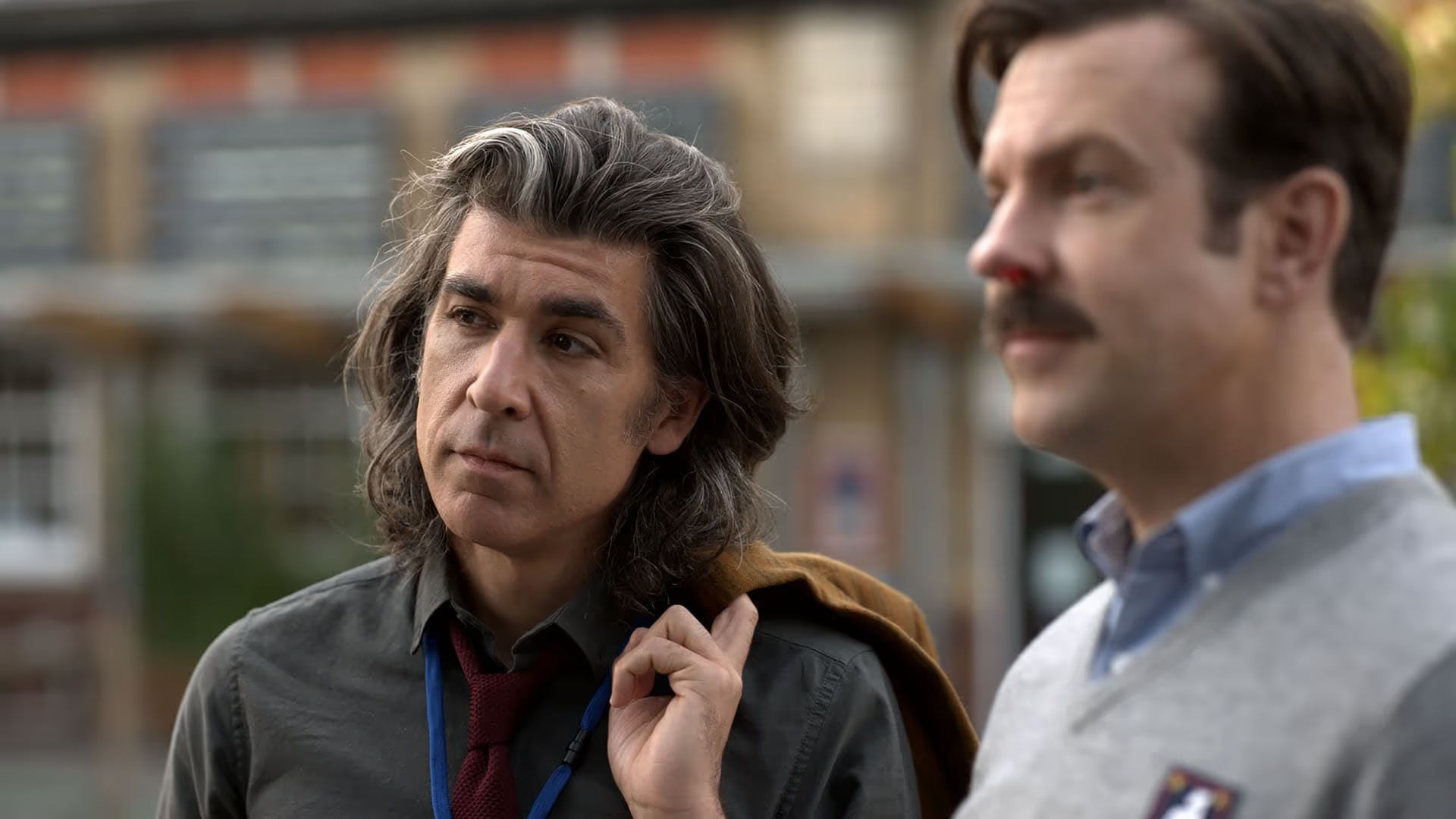
I didn’t expect to sit there and have an epiphany from a character I once didn’t like. It was oddly suspect to find the character of Trent Crimm going from one of the more malicious components of Ted Lasso’s life to a character who became one of my favorites from the beloved show. Before I continue onto a spoiler-filled tirade about how a wholesome TV show made me examine my role within this space, I want to remind you that the show has ended months ago. Turn around if you don’t want a huge moment spoiled.
There. Let’s get into it now.
In one of the episodes of Ted Lasso, name and number escape me at the moment, Roy Kent commands his fellow comrades to not say anything in the presence of writer Trent Crimm. Starting out as a writer for The Indipendent and becoming a freelancer, Trent was always a character that you sort of loved to hate. He was a gate keeper in a sense, providing the public with a service to translate information through a skeptics eye.
Trent is a journalist as I said before and one of the roles of that position revolves around examining the details around a subject matter. In this case, he had one of the greatest stories to tell during Lasso’s entire run with Richmond. He was there asking the hard hitting question, “Is this a joke?” to Lasso’s face, solidifying his role as one of the minor assholes of the show. A sliver of doubt to which others who respected him would find suitable and in line with their predisposed vision and hate of Lasso. There was egg on Ted’s face, with the first throw credited to Trent.
At one point, Trent and Ted go out for dinner to which Trent becomes enamored by Ted’s demeanor and dedication to making others feel good about themselves. Yes, the world of football hated Ted, but everyone else outside that realm seemed to have loved him. His infectious wholesomeness spread to even the deepest parts of Trent’s psyche, announcing how he hopes Lasso fairs well in his uphill journey.
Later, Trent is made privy to information and shares it with Ted, causing him to leave his position at the Independent. He then becomes one of the fellow Diamond Dogs, dedicating himself to the story of FC Richmond, putting Ted’s prolific coaching style dead center of the team’s rise to success. Now, it didn’t quite end up that way, with FC Richmond winning it all, and it didn’t need to actually happen. Would it have felt good? Absolutely, but I digress.
At the start of Trent’s research into The Lasso Way, he came across the famously hardened and well renown (and respected) Roy Kent. Roy Kent was a tough nut to crack, something we became instantly familiar with in the first episode. All Trent wanted to do is write abut how the team saw success, but he was blocked in every which way thanks to Kent’s sheer will and intimidation. It wasn’t until Roy Kent took Trent Crimm into another room, revealing one of Trent’s first written pieces about Roy Kent. It was a negative criticism, one that Roy held deeply. So deeply that he kept it in his wallet for years. Kent was a tough lad but under his hardend scruffy exterior was someone looking for immense levels of appreciation and belonging. That is a whole other essay though.
When faced with this moment, Trent came clean with a phrase that I think about all of the time. To paraphrase, he wrote negatively about Kent because he was also young, arrogant, and trying to get ahead by being edgy. I think that is something that every writer experiences one way or another.
Games media is a wild bucket of influence. You have the well respected and trained writers from outlets like IGN, Polygon, Kotaku, PC Gamer, and so on who have each cultivated an audience who seeks these platforms for guidance. Then you have the YouTubers within each respective space who provide you with information as well, but because it is in a different format we hold it in a different light. Naturally we have the rest of the bucket which includes podcasters and maybe the guy who shouts at you during fairs. Not saying that podcasters are the same as the guy yelling at you to try his home-made razor blades, but with the amount of Manscaped ads I have heard, they are dangerously close. Just like the Ball Trimmer 5000 from Mansc-I can’t do it.
My area of influence stems from an incredibly odd area. I might not be the defining factor when it comes to what people should buy or play but I do know my stuff. I consider myself a technology expert, but that doesn’t mean that I know everything on the top of my head. Part of being an expert revolves around finding the solution to a problem that can be solved with the proper research. The only thing that is stopping me and the average consumer is a thorough Google search. I digress, again.
People look at what I say about a game and can make an educated guess on if the game is worth their time or not. I remember the first game I reviewed for Seasoned Gaming, Dustoff Z. A game that was a port to PC mobile game that was pretty bad. I wrote harshly about that game and gave it a rather poor score. I gave that game such a lashing that it provided better comedy than a sincere criticism. If I were to review it again, I wouldn’t be as rough on it as I was. I was trying to be edgy and make a name for myself.
I see this in others as well, people who lash out at whatever it is that is around them. Naturally, they gain an audience which encourages them to keep on creating this negatively toned reactionary content. They are looked at as problematic people within this world and never respected for what they say or do. I know for a fact that cultivating my overtly negative views would end with me acting like the next Shapiro, Walsh, or 1/4-ing (I refuse to write all of their full names). Becoming a pundit that gets paid to spew negativity is not something I want to do.
So, after I saw the true character of Trent Crimm exposed, that is when I decided that I too needed to become open with my approach to how I view the gaming medium. Sure, I can be critical and I don’t back down from that. I am still very critical (if my Final Fantasy 16 review has anything to say about that). I still voice my “hot-take” opinions when I get the chance, and occasionally choose violence in ways that tickle others in their fight or flight response. Despite all of that, I try to be positive these days. From indie darlings to the next 300-hour campaign that might be bit of a slog, I am trying to be better not just to readers but to myself.
I’ll be tough when it is called for. I’ll be loose when needed. There is a deep, flawed understanding of what a critic is and what they do. I’m trying to be a better one and I think since Dustoff Z, I have become a better writer and critic. Who knows, maybe one day I’ll revisit it and give it a bit more of a justification to exist.
As for now though, I think I’ll be trying my hardest adopting and telling others about the Trent Crimm way.



 Common Loot
Leave a comment