
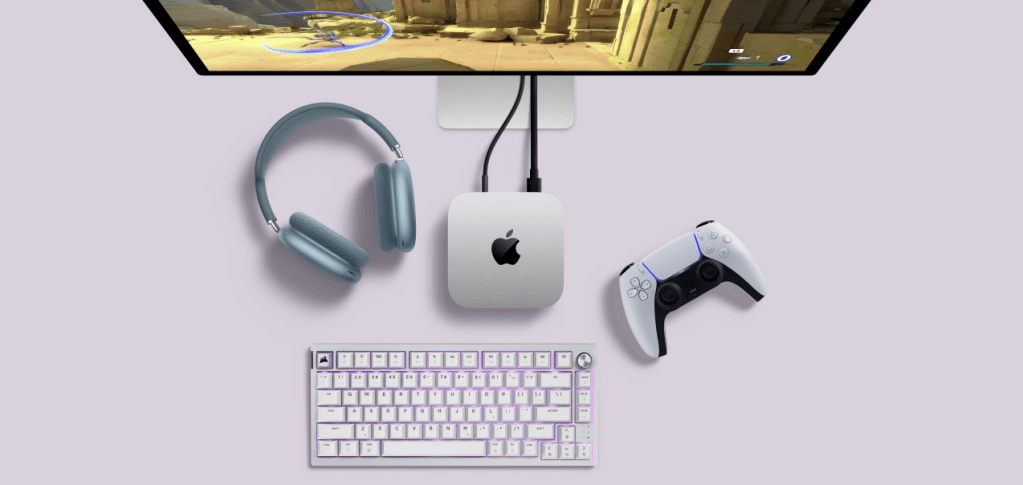
Years ago I told people that they should be keeping their eyes on Apple when it comes to literally anything. Over the last several years, Apple has gained mass appeal with over 75% of large businesses now adopting the company’s products. As of the October 2024 Steam Hardware & Software Survey, Apple only makes 1.39% of the platform with Windows leading by 96% and Linux at it’s 2% (like milk). So, why as a guy who talks about games suggests people keep their eyes on Apple when it comes to this area? Let’s take a look!
Apple’s Growth
Back in 2020 Apple marked their ground with the release of the M1 chip made with their own silicone and architecture. Before this major step, Apple relied on Intel for their chips, which seemed to blend in directly with Apple’s whole “i” moniker for everything such as the iPhone and the iPad. It only made sense for people to see an iMac with an Intel i5 chip; this changed.
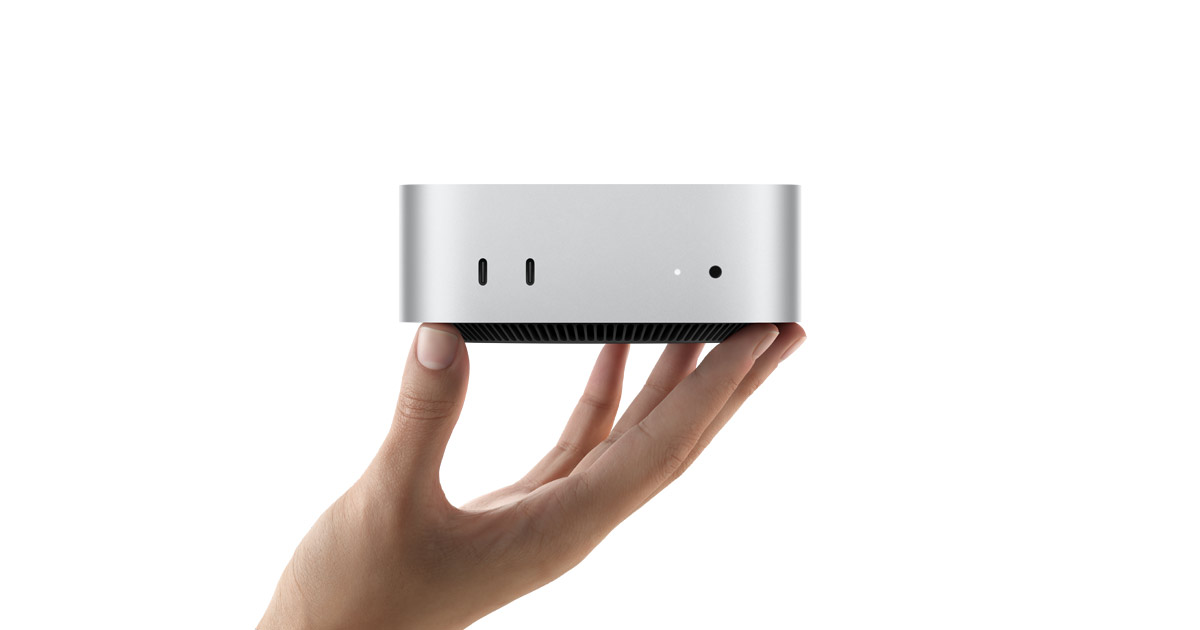
With the rise of the M Series of chips, people saw a genuine uplift in performance compared to Intel’s brand of chips. This only started the downfall of Intel and their rebranding. Apple was the first to publicly announce a hybrid structure of chiplet architecture, adopting the world of Performance and Efficiency cores. They even integrated the graphic processing unit into the M1 chip and while this isn’t a foreign concept, Apple managed to shout loud enough for everyone to hear.
With this, Apple cemented themselves in for years of planning and pushing forward with concepts that even I didn’t think was quite possible. Four years later, we are seeing games like Resident Evil 4: Remake and Baldur’s Gate 3 play on Apple devices. I’m kind of astonished by the quality each of these games have.
Apple Experience
On my 13″ MacBook Pro, Baldur’s Gate 3 runs surprisingly well. It absolutely rips through my battery life, but the experience is quite good; better than my Steam Deck. As for Resident Evil 4: Remake, it runs quite smooth on the 2024 iPad Air. While the quality of both games can be questionable to many, in my experience, I can’t say that I was offended by any means. If anything, I saw this as baby steps to a much larger goal.
Yes, while these are big titles that fit the mold of being a AAA game, they are few and far between. Developers are still not launching many games day and date on Mac. For example, Baldur’s Gate 3 wasn’t updated to the 1.0 version till a little bit later. So, for that time, Larian pushed out a patch that got the game as close to the launch version as possible.

When I looked into how these games are performing well, it is clear it is due to Apple’s unique API called Metal; the power of which cannot be understated. With the promise to bring more games to Apple devices, Metal offers enhanced visual tools with ray tracing capabilities, a mountain whose peak is so high it is almost unsustainable in a matter of ways.
Heavy Metal
What does Metal do though? According to Apple, Metal is a suite that incorporates their Game Porting Toolkit 2 to assist with taking Windows binary, run it on an evaluation environment for Windows game, and get a baseline estimate for performance. It also verifies shaders so that they convert correctly, offers debugging tools, and even gives you access to game porting example code to learn how to map games to subsystems to apple frameworks.

Not only that, but Metal also gives access to Apple silicon’s unified memory profiles, unique shading languages, and even machine learning. I know some folks are not wild about that last bit, but it might give the results that people are used to, similar to NVIDIA’s DLSS architecture.
When I think about my games and what I typically use to benchmark hardware, I look at games like Baldur’s Gate 3 specifically for the finer details and because Act III features a lot of on-screen elements that require a ton of processing power.
One game that I currently run as my top contender is Cyberpunk 2077, which is also slated to come to Apple silicone within the next few months. Cyberpunk 2077 alone is a resource hog, so I am wondering how this game in particular will operate on all forms of the Apple M series chips, supposably playable on the Apple Mac mini with M4.

One of my favorite titles, World of Warcraft, is already playable on Mac systems. Although the 13″ screen isn’t ideal for an MMO, it does make the idea of the Mac mini a little more digestible. The small system has a lot packed into it where it can handle various tasks just like writing this article to enjoying some of your favorite games.
Conclusion
This is where Apple has my eye. While the growth of ARM and SOCs become more apparent, graphics cards and system components are also growing in cost. I’m not saying that Apple silicone will replace the standard tower in any means, because there is still a lot of cons that easily outweigh the pros to the common gaming enthusiast. What I am saying is that Apple is catching on. One day, our expectations will change and we will look back and wonder how Apple managed to get to the position where they are when it comes to their gaming prowess. It might not be with the past launch of the M1 chip, but it is certainty tempered by the striking of the M4 line of chips.



 Common Loot
Leave a comment