
For over five years I had a neat little podcast called Copper Piece. We started like every podcast does, just a few dudes playing a game, having a bunch of laughs, and someone says the infamous words- “let’s make this a podcast.”
Little did I know that we would reach an audience all around the globe. We even had a few buddies over in the UK who we all enjoyed listening to. I would think of some ideas while listening to their adventures. In a way, it was inspiring, but I digress.
We took a huge leap and decided to swap from the Dungeons and Dragons universe over to Starfinder! I wanted to do something sci-fi and so did the players. So, I made a story, then re-wrote the story. Then I planned more and then I lost it all. Then, I got a MacBook Pro and it changed how I would plan all of my campaigns.
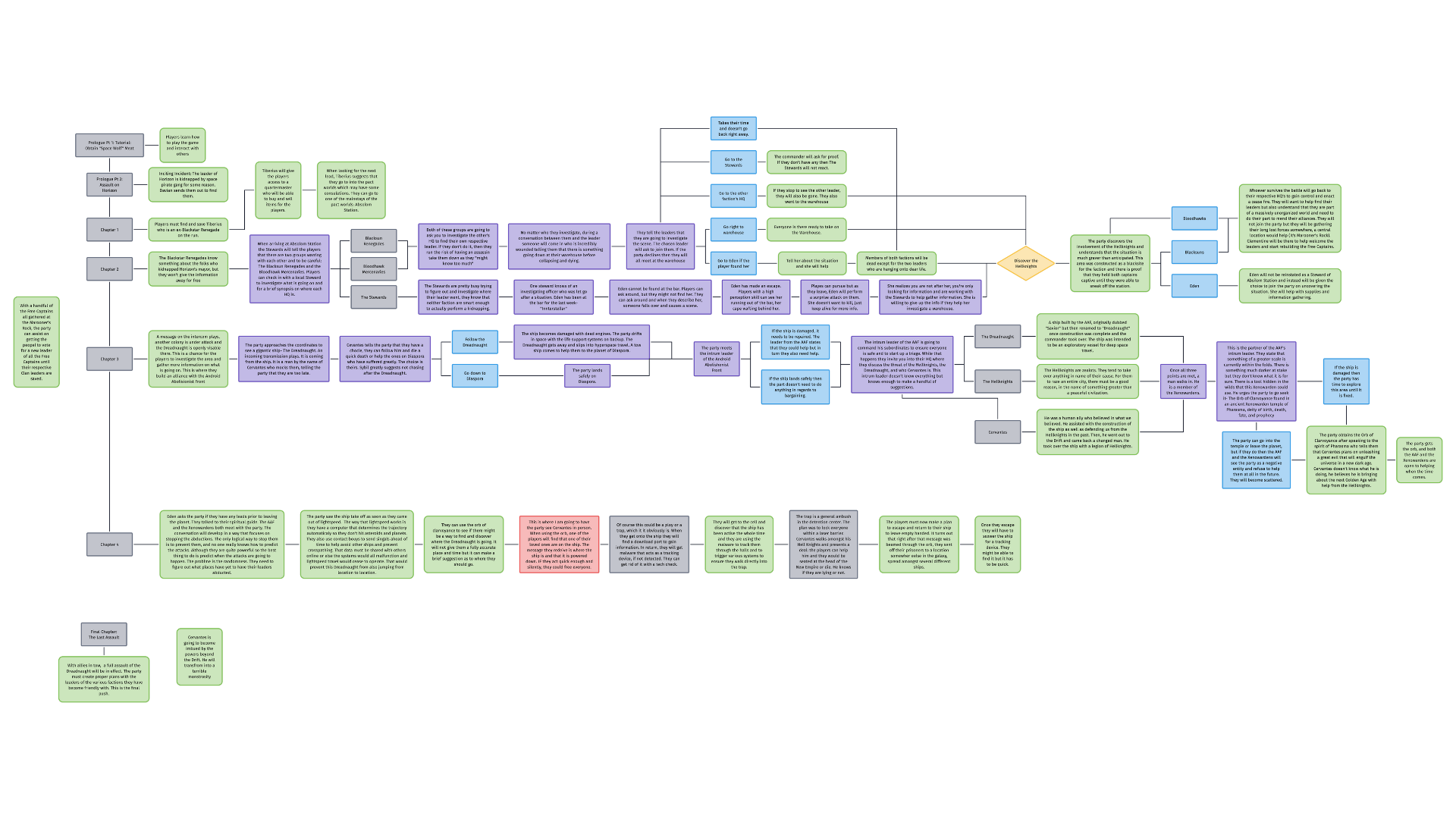
Above you will find what I call “organized madness.” It is a visual depiction of what my mind goes through when planning segments of a campaign. The way I approach the campaign used to be via the Bethesda way- design a map and fill it with cool stuff. The problem is that type of design requires a lot of work up front, that is before the players even touch their own characters.
Fallout 4 has over 150 unique locations which is huge for an open world RPG. Creating that by yourself is incredibly difficult, which is why most TTRPGs tend to stick with a general path. This is why I designed my campaigns to be as bottled up as possible while also leaving the false sense of security that it is an “open world.” This is a tactic you see in a lot of games but might not realize. I believe The Outer Worlds to be an example of that concept where the idea is a bit more transparent to the player who ventures from hub to hub. Even Baldur’s Gate 3 is a more current example of this design concept.
Despite these elements, I have chosen to stick to a main plot of good vs evil ships in space. Pretty simple. I started out with a hidden tutorial that acted as the inciting incident. Players will meet a character, the owner of a dilapidated ship that has seen better days. This character would talk to each of the players, ask them how they are feeling, and then present himself in a caring and nurturing way. He briefed the players and sent them on their way.
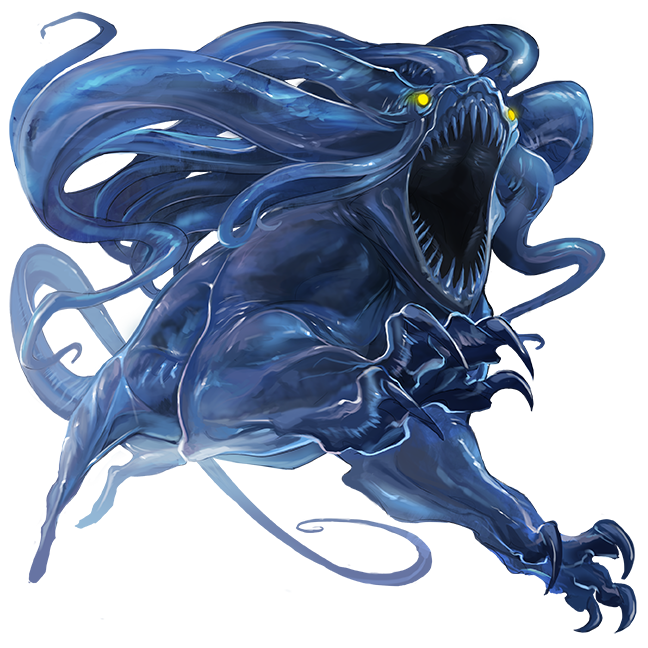
The players had their task, to capture a space wolf of sorts, an Akata. This monster in particular is a bit tough, so instead the players would face off against space goblins who were after the same thing. But, this would be after an NPC, Jenkins, would jump out of the ship along with the players, break his ankle, and get dragged away by one of these beasts.
So, the players had motivation to keep moving, to save their friend. They would also meet the space goblins and get a tiny bit of backstory about their mercenary friend. Turns out that the leader of the space goblin sect and the man that hired these mercenary players had an allegiance at one point in time.
The players were given a chance to either fight these space goblins or talk it out. Their friend Jenkins and an Akata were used as pawns within the conversation. The players then decided to fight. They managed to save Jenkins and let the Akata free, unleashing it upon the space goblins. In turn, the players managed to steal the space goblins’ ship and leave them to their fate. This was all in the first chapter and in turn taught the players how to actually play this new system. There was ample roleplaying aspects as well as multiple ways to solve the situation.
To be honest, I didn’t count on them stealing the ship, but I had fun realizing the one part that I didn’t plan. Either way, they deserved it. The ship was filled with trash.
Later Chapters
Chapter 2 might be the most robust chapter planning to date. It has a lot of twists and turns within the diagram because this is where I really started to embrace Diagrams. I was able to provide multiple choices and even come around to a key idea where I could present one premise and still use the same map I designed no matter which choice they made. I was also able to introduce new factions to the game and show exactly why they were bad, from the player’s perspective.
Chapter 3 was similar in a way, and by the fourth chapter the game started to fall apart a bit. While planning this and running the third chapter, the game began to fall apart. Years after dealing with virtual tabletops and playing online took a toll on us. It was something that a lot of us experienced within the TTRPG world. Playing online was so tough because it just couldn’t keep me focused, and I was running the games!
Life After Copper Piece
It would take a while before I planned something else. A year I think to be exact. I sat in my room just absorbing the creativity of companies like Larian and Bioware instead of crafting something my own. I have a book idea that I have been toying around with, but sitting down to write after my day job of writing took a toll.
So, onto new ideas, right? This time I have been cooking up something real special for my players. Aside from the lack of mics and servers sending signals all over the world, we are keeping this personal. When I can share what I have made, I most definitely will.


 Common Loot
Leave a comment