
Telling character-driven stories is a challenging endeavor. There are elements you have to account for, such as how relatable a character is to the audience. You also have to apply this tactic to side characters and even villains. It can be even more challenging when you must consider the story and plot itself and how each of these characters make sense in the grand scheme. Everyone who appears on screen has to have a motivation, backstory, and flaws. Depending on the type of game and the given scope, everything has to be tuned to give the player a sense of progression without feeling too linear, making players feel as if their agency has bene robbed in a way.
Linear experiences can exist in many forms especially when you consider an open world design. The story pathing can be straightforward while offering smaller dishes of content that become fully realized plot lines that later lend themselves to the bigger picture. When it comes to open world games that present a linear storytelling concept, I hold Sucker Punch’s Ghost of Tsushima as the gold standard.
Narratively speaking, it doesn’t pull punches. There are tons of aspects to this title that are fully realized and followed through, no matter how depressing they could become. While I don’t want to fully dive into every narrative concept, as I believe people should experience it for themselves, I do want to shine a light on the relationship between Jin and his long-time acquaintance, Ryuzo. Take this as your spoiler warning if you have yet to play the game.
The Foundation
While the Khan is the main antagonist of Ghost of Tsushima, he is much different to what Jin represents. The Khan represents a manipulative nature, the changing times, and the necessary force to make Jin embrace the unorthodox solution to the invasion. While he is cunning, the relationship between Jin and the Khan is very surface level and borderline reactionary.
As the story unfolds it is clear that the Khan is always two steps ahead of the game. He knows how to manipulate others to doing his bidding. He understands the predicability of his enemy, which is why Jin must embrace the alternative method of taking the Khan out of the picture. The history between these two characters is otherwise non-existent, and that is absolutely fine because the Khan isn’t supposed to be that person who was too close to Jin in the first place. That “honor” belongs to Ryuzo.
Amongst the chaos rampaging across Tsushima Island, Jin reconnects with Ryuzo who has become a ronin samurai. We quickly learn of the history between these characters. They were in competition with each other in the past to which Jin bested Ryuzo. While years have passed since then, Ryuzo still keeps that turning point in the back of his head as it transformed the trajectory of his life. Instead of winning and perhaps getting the rewards he sought, Jin won, and now Ryuzo must deal with the fallout, years down the road.
We learn more about what Ryuzo has been up to over the last several years as he leads a band of ronin who happen to be starving and ill equipped to fight. That sense of urgency within the camp is heightened with every starving fighter we see. We all understand what it is like to be hungry, but hungry while trying to defend your livelihood is something else completely. We can only assume how daunting that could be, not just for the Ronin but for Ryuzo who is seen as the leader of this group, and therefore the caretaker of his people. It is a strong juxtaposition between the two characters, the wealthy and well-fed noble against the struggling freelancer who has this sense of animosity against the world at large, and there is only one person who could unlock the shackles that Ryuzo feels bound to, and it’s not Jin.
Animals as Leaders
There is a book by writer and professional speaker Simon Sinek called Leaders Eat Last. The book itself discusses the many aspects of leadership and what it means to direct a successful team in modern day environments. Simon’s vision can be experienced through his various discussions, displaying his passion for the working people and how leaders must care for those in their charge. It is a very simple conclusion that rings true no matter how you paint it, good leaders get good performance.

Ryuzo is a leader within every sense of the word, but he’s not a good one. He understands what the responsibility as a leader holds but he displays a sense of arrogance in his decisions. Yes, he must provide for his people as any reasonable leader would but he exchanges the long term gain for the short term solution, which only places him further into a proverbial debt. So when he is offered an olive branch later in the game, this illusion of safety for Jin’s life, he takes it.
What Sucker Punch does here is actually quite good and helps us establish a footing and motivation for Ryuzo. We see the situation he is in, it’s dire. We could use his help but he and his men are starving. There is an element here that is so basic that we come to understand it all too well. On top of that, the brutality of the Khan’s rampage across Tsushima Island continues to trail on as the backdrop to all of the events we come across, and it’s no different with Ryuzo.
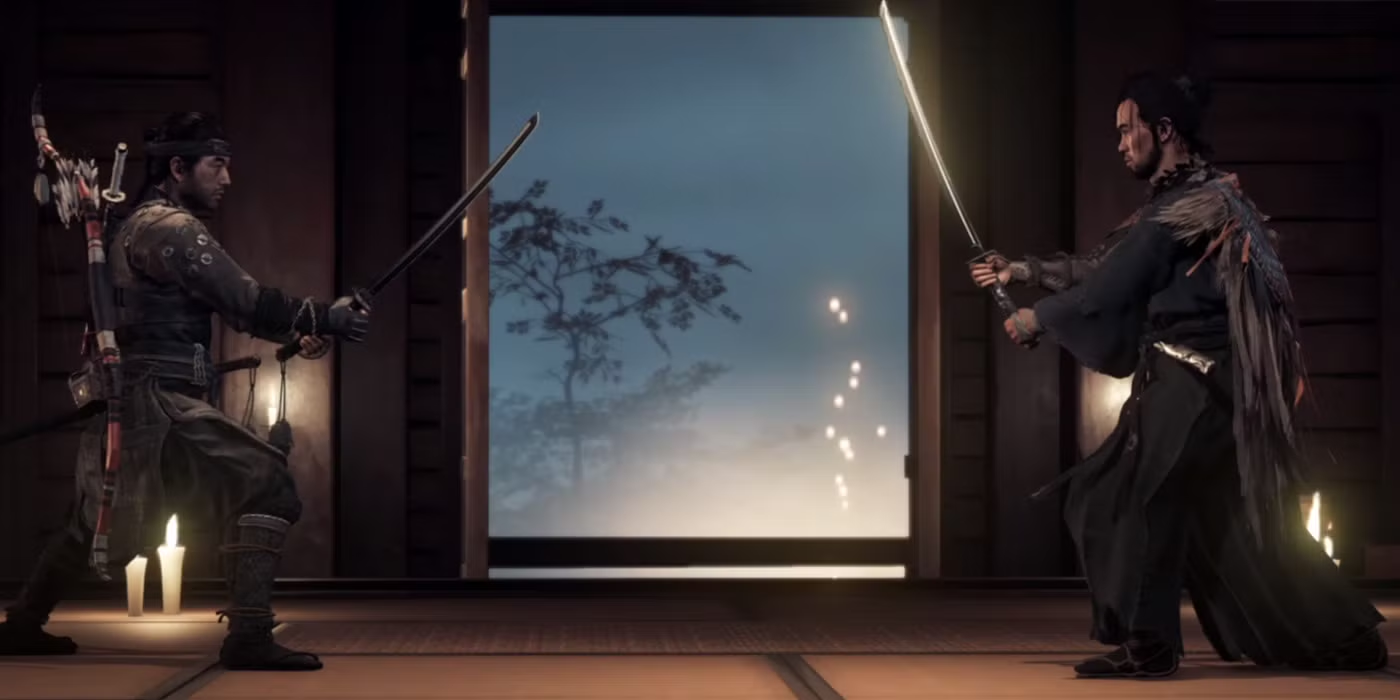
We knew that the ronin were starving and we saw it ourselves. We interacted with the camp earlier in the game. Ryuzo told us countless times that he can’t fight a war with hungry and hurting people. Jin didn’t quite deliver a compelling argument to make Ryuzo fully embrace his way of thinking. At that point, it is understandable why Ryuzo would side with the Khan. If anything, there is nothing that Jin could ever do to bring Ryuzo to his side except change the past where Jin loses to Ryuzo, but that begs to ask if anything would actually change if that unfolded. Would winning turn Ryuzo into an even more arrogant and egotistical character? Would he still join the Khan if he was able to best all those in battle? Yes, I still believe he would because of his core character traits and motivation, and I also believe that Ryuzo would still inherit a band of ronin that he must care for because of it. He doesn’t display any sense of critical thinking which would eventually lead to his demise.
The Downfall
With the curl of the monkey’s paw, Ryuzo goes face-to-face with a particular situation that leaves him shaken to his core. Remember, all he wanted was the safety of his people, but when he is urged to light an innocent man on fire to drag out a lord, he is left to understanding the sheer brutality of his ally. Ryuzo always considered himself to be the person in the right, and for his egotistical move, he is rewarded by experiencing his first kill of not just a person, but the culture and livelihood they represent. In that moment, Ryuzo died and becomes a husk, one that sees his faults and no way to fix them. There is only once choice and that is to continue on and perhaps find some sense of solace at the end of this complex path.
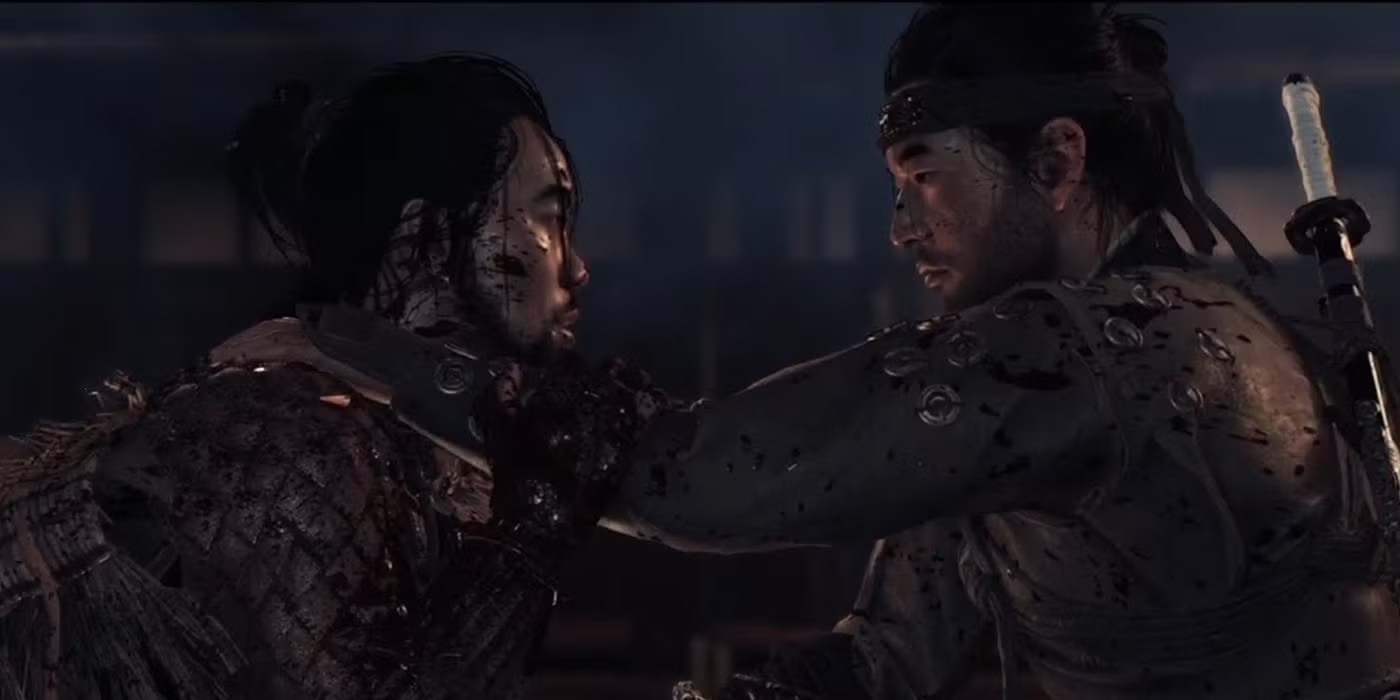
Jin warned Ryuzo in the past to not align himself with the Khan and to help save Tsushima Island. But that goal of success was too distant for Ryuzo to fully grasp. This clouded judgement tends to happen in situations where the stakes are high but not with Ryuzo. No, it is his sheer arrogance and animosity for Jin prevents him from moving forward. His lack of compromise and inability to shift his ego due to his long-lasting grudge prevents him from acting any other way. Sure, he says he acts out of the goodness of his people, but it is only a catalyst. Ryuzo cannot differentiate the needs of himself from the needs of those around him, and if he really cared about his people then he could have found another way, but he would much rather align himself with the power that seems to be overtaking the island rather than try to stop the complete obliteration of the culture that sustained his existence.
Remember, the Khan isn’t just invading, he is committing an act of mass erasure of a people and the culture they created. We know this because a good sum of our time revolves around exploration and experiencing this culture first hand. In a way, as Jin, we are not just defending ourselves or our people but the world that has been crafted by those who sacrificed so much to lead a better tomorrow; Ryuzo doesn’t believe in this, and that is why his fate would always be the leader of a dying clan of ronin.
To go back to the burning of the peasant; this act not only solidifies Ryuzo as a full on traitor to his people, but presents him as a selfish individual who won’t do what needs to be done to help those around him, he only does it to preserve himself and retain a sense of existence, but as we have pointed out before, this comes at a cost- his humanity.
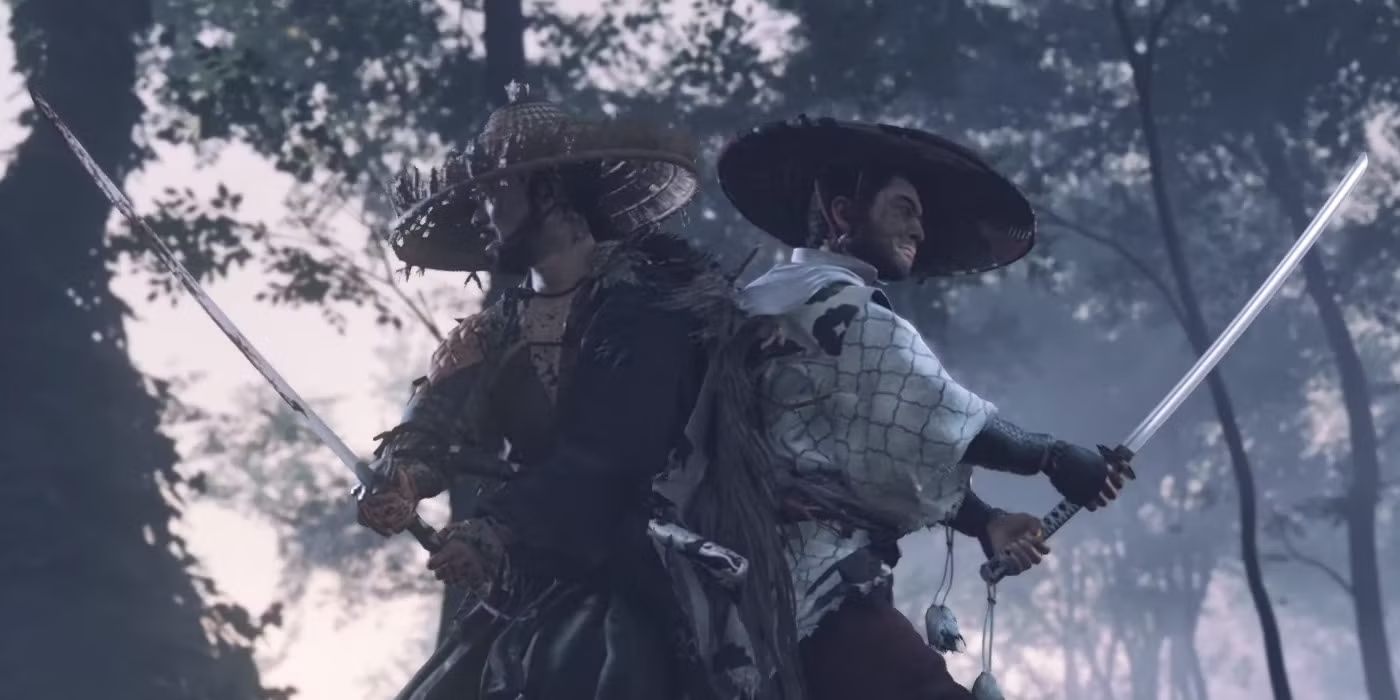
The only consolidation he makes is his attempt to negotiate with Jin and convince him to join the side of the Khan, but it’s not for the sake of Jin or the rebels, it’s for Ryuzo himself. Ryuzo already lost one sword fight, and we learn throughout the events that lead us to the camp of ronin that Ryuzo has been bested by Jin several times over in their younger years. Defeating Jin in battle certainly didn’t seem possible. No matter how hard Ryuzo tries, it just isn’t possible because he mentally cannot change, he is selfish in every way possible including this act of negotiation that ends in Ryuzo’s justified death. He took his emotions to the grave, including the grudge that he held onto his entire adult life. His reward was the thrust of a blade welded by someone who was willing to risk his own life for those around him; the antithesis of Ryuzo’s own greed. In the end, Ryuzo was freed from his internal prison of guilt and shame.
The original draft of this was several pages long so I cut it down to focus on one of the more interesting relationships in the game. I love the character of Jin and despite his own inner conflict, he is able to measure the best options despite them not aligning to his past beliefs. There is a sense of growth with Jin while Ryuzo didn’t have much, but placing his feelings on his sleeve made him a victim of his own hubris. After all, there is very little you can do to redeem yourself from aligning with a killer who operates on such a large scale and without remorse. That being said, when you think about the inner machinations of Ryuzo, it is clear that his path was always paved with the gravel of grief, hope, and self-preservation while Jin took the more difficult and challenging road that lead to success.


 Common Loot
Leave a comment