
It is the 1980’s and the United States is experiencing a stage of media that has become only slightly obsessed with respective visions of the future. Blade Runner released and gave us this noir look at a capitalistic-driven world inspired by the great Issac Asimov. This would be the jumping point for Mike Pondsmith whose game Cyberpunk hit shelves and tables of tabletop RPG fans in 1988.
If you are on the internet at all, you know where this story goes. Cyberpunk receives a lot of underground success but when Cyberpunk 2077 released on December 10th 2020, the middle of a global pandemic, fans including myself, were sorely disappointed. It wasn’t the writing or characters that graced our screens, it was the quality of the game itself that prevented players on certain consoles from experiencing the wonder that Night City had for its visitors. Unfortunately, a handful of players didn’t get a real chance to dig into the meat and cybernetic bones of what CD Projekt RED had to offer.
Years later, we finally got the update that we all needed to experience this massive game, fixing a litany of issues that plagued the title before. The gameplay got better, the graphics were less impactful on the hardware, and everything felt smoother. After three years of improvements, Cyberpunk 2077 feels like the game we all deserve especially with the first and only expansion, Phantom Liberty, hitting digital shelves.
While all of these improvements are necessary, there is one component that didn’t need improving and that was the writing and narrative design. From beginning to end, the writing has been absolutely consistent on every level. There are even a few elements that came to surprise me, thinking that certain situations would adopt a more linear concept that felt predictable, but ultimately proved me wrong.
Within the dual-prologues that Cyberpunk 2077 puts you through, there is enough foreshadowing and plot elements to tell you right from the beginning that nothing ends well in Night City, even if you are part of a large corporation. The game goes even as far as to tell you that this is not your story as a player in the same way that The Witcher, Star Wars Jedi Fallen Order, and even God of War isn’t your story; Cyberpunk 2077 is the story of V, a victim of a system that only gives the keys to those who are willing to take it for a ride, burning out in the inevitable outcome.

How does CD Projekt Red tell you all of this? How does it properly convey the desperation, violence, and tone to the player throughout a fully interactive environment? We can explore all of that, but first we must explore the unique concepts of a double prologue; the first consisting of three different backgrounds followed by a second prologue which leads into the tumultuous first act.
Creating Your Avatar
When you start up a new game you are quickly thrown into a vast character creator. There are so many options to create your own version of V to your liking. This has no impact on the game besides the voice you hear through various interactions with the characters. Everything else is just flavoring. The real elements that impact your experience comes when picking your stats and character background. This part does’t seem all that narritvely driven until you get into the next section- stats.
In true RPG fashion, you can set your stats depending on the type of style you want to experience. Each main skill also features a talent tree which includes some great artwork and callbacks to Edgerunners, with a few images including David Martinez and Rebecca. If you have put enough stats into various skills, you get some additional options, which is a nice touch for exploring. In some cases, throw enough points into the “Cool” stat and you’ll get some neat conversation options. Other skills also have an effect depending on the situation.
The background is what really matters the most here, not only because you’ll get additional conversation options and input within specific scenarios, but you get to experience a unique opening sequence that introduces you to the three types of lifestyles a punk lives.
There is the Streetkid who has always lived their life in Night City as a rapscallion, a ne’er-do-well, if you will. There is the Nomad who has spent their life outside of Night City, within the deserts, typically with a clan. Then there is my personal favorite, the Corpo who starts within an Arasaka building, typically adorned with a lavish lifestyle that is also filled to the brim with corporate semantics.
Each one of these backgrounds acts as a part one to the prologue, which each one telling you a little bit about the culture of Night City while also adding a bit of reparability. No matter which one you choose, the story always introduces you to Jackie Welles, a fellow vagabond who explains the world around you as you slowly take in every bit of neon and smoke.
The Streetkid has you stealing an expensive car for a client and things go terribly wrong. You and Jackie end up getting through it and start your friendship and adventure together. In the Nomad play through, you are tasked with smuggling an item into Night City and Jackie is the contact with the package. As a Corpo, a manager wants you to snuff out a fellow worker, so you consult Jackie, and then you lose everything you had once the plot has been discovered. Each one of these opening sequences can average about 20 or 30 minutes depending on how you take the conversations and how much exposition you wish to hear, which can be used to solidify your understanding of the world.
The Streetkid
Life of a Streetkid is quite adventurous to say the least. Night City is filled with gangs and those who wish to take you out to climb higher on the social ladder because crime doesn’t just pay, but it can make you powerful. While others may have dreamed of becoming a famous baseball player or an actor, dreams that are still relevant to Night City, it is the glorification of crime which drives characters like Jackie, and it is most prevalent here in the street kid origin.
Choosing the Streetkid play through puts you right into the thick of the life one would lead. You become familiar with one of the gangs, the Valentino’s, which puts you into contact with Jackie. It bridges that gap easily and naturally to where it makes perfect sense. The origins are there, and most importantly, the essence of family and the importance of having others around you to thrive are also present. Family is the one thing that maters to the Valentino’s, and this is thoroughly represented throughout not just this instance, but through the entirety of the game.
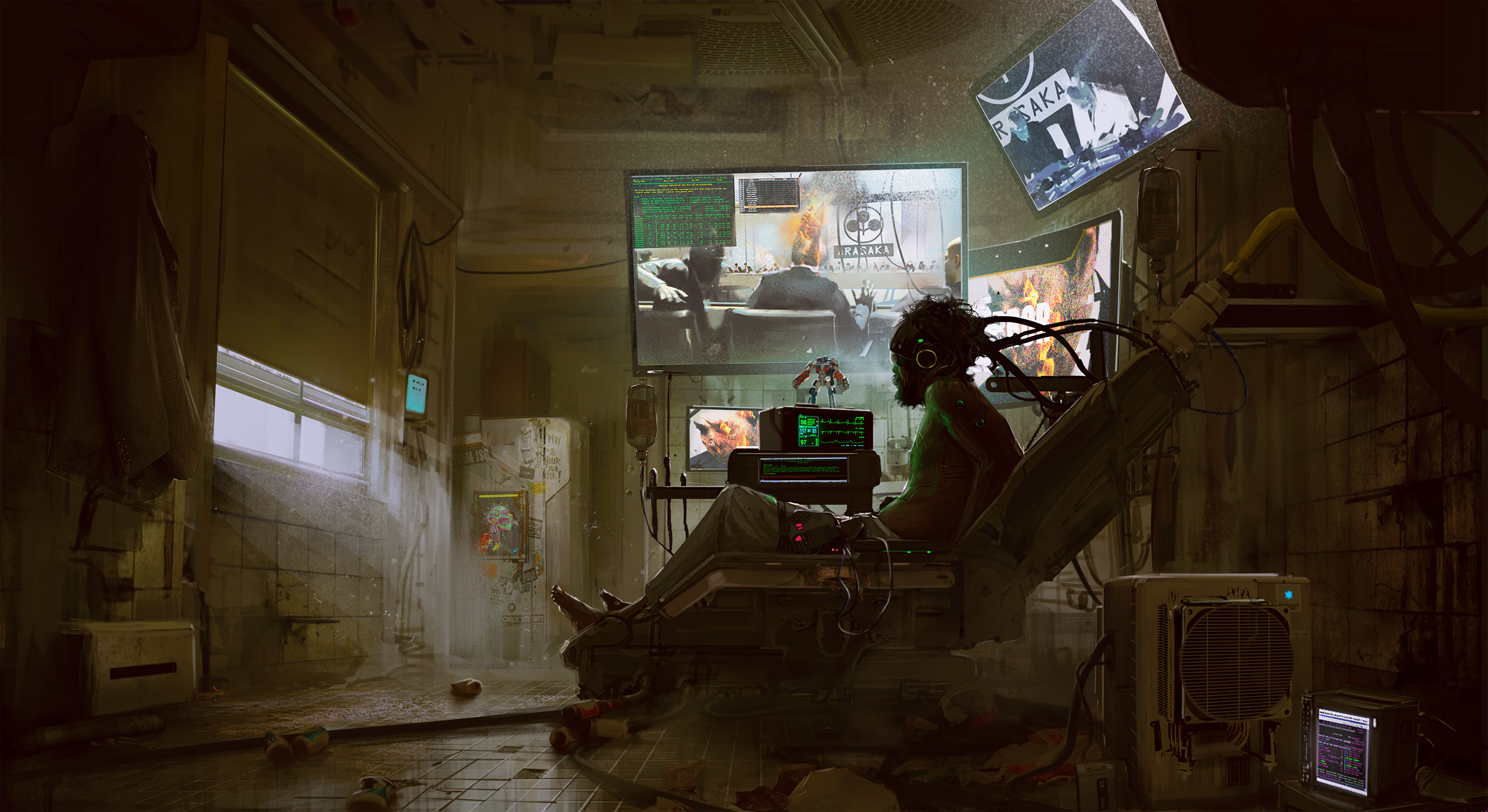
You get a leg up on understanding the culture of the Valentinos. Inspired from Hispanic heritage but mixed with modern Night City themes. While technology is prevalent in this world, the Valentino’s have this unique style that pays homage to their past. They clearly don’t outright ban technology as it is impossible to do so in this modern age, but they embrace while keeping it at an arms distance depending on who you speak to. Most importantly, they reflect the “cartel” style that we have seen in other movies and TV shows, including their dedication to Christianity.
Not all of the Valentinos actually respect V or Jackie for that matter, and in the game often shoot at V, but there is a reason behind that which I will expand on at another time.
The Nomad
Off in the desert, a tired and stranded V rips off her patch of what we can only assume is of their previous Nomad clan. This introduction doesn’t quite nail what a Nomad is directly, but instead you learn about some of the aspects of this lifestyle from Sheriff Andrew Jones, who can be a bit of a stickler.
Some contention occurs with plenty of dialog options that more or less tell the officer to buzz off, but he highlights some very important information along with V’s confirmation. Nomads, like the Valentinos, are a family except the Nomads stick to the desert outskirts. They conduct various hit and run operations on caravans, turning the surroundings of Night City into a Mad Max style zone where anything can happen to anyone.
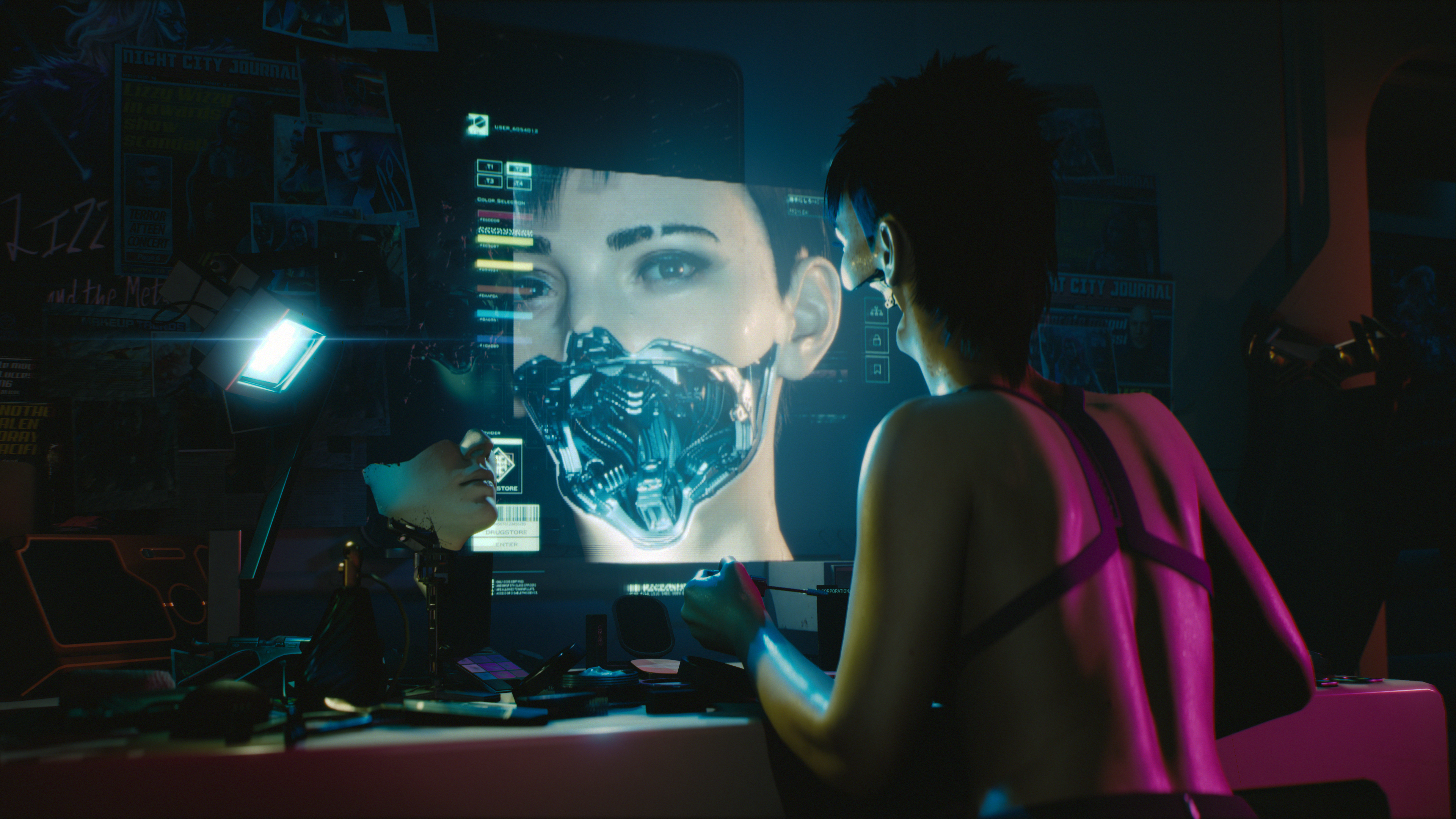
It is noted that V is alone and has abandoned her Nomad lifestyle and wishes to change her life around into something it wasn’t. The only time you really learn about the full extent of Nomad lifestyle is when you find a couple of characters in the desert, mainly one by the name of Panam; but I’m getting way too ahead of myself.
Building into the general attitude of the Nomad lifestyle, this segment places V face-to-face with law enforcement, communicates the importance of her car and how she is no longer part of her clan, and then takes off to a radio tower where she gets a bird’s eye view of her surroundings. With Night City sticking out in the distance, looming over the sands that surround it, the neon signs and holograms act as this monument to corruption that you will soon become familiar with. Nomads have their own grass roots culture that thrives outside the city, heading into Night City feels like an abandonment of ideals. After all, who really knows what led to the exile of V? All we get is just one side of the story, and that is all that matters for the sake of the story.
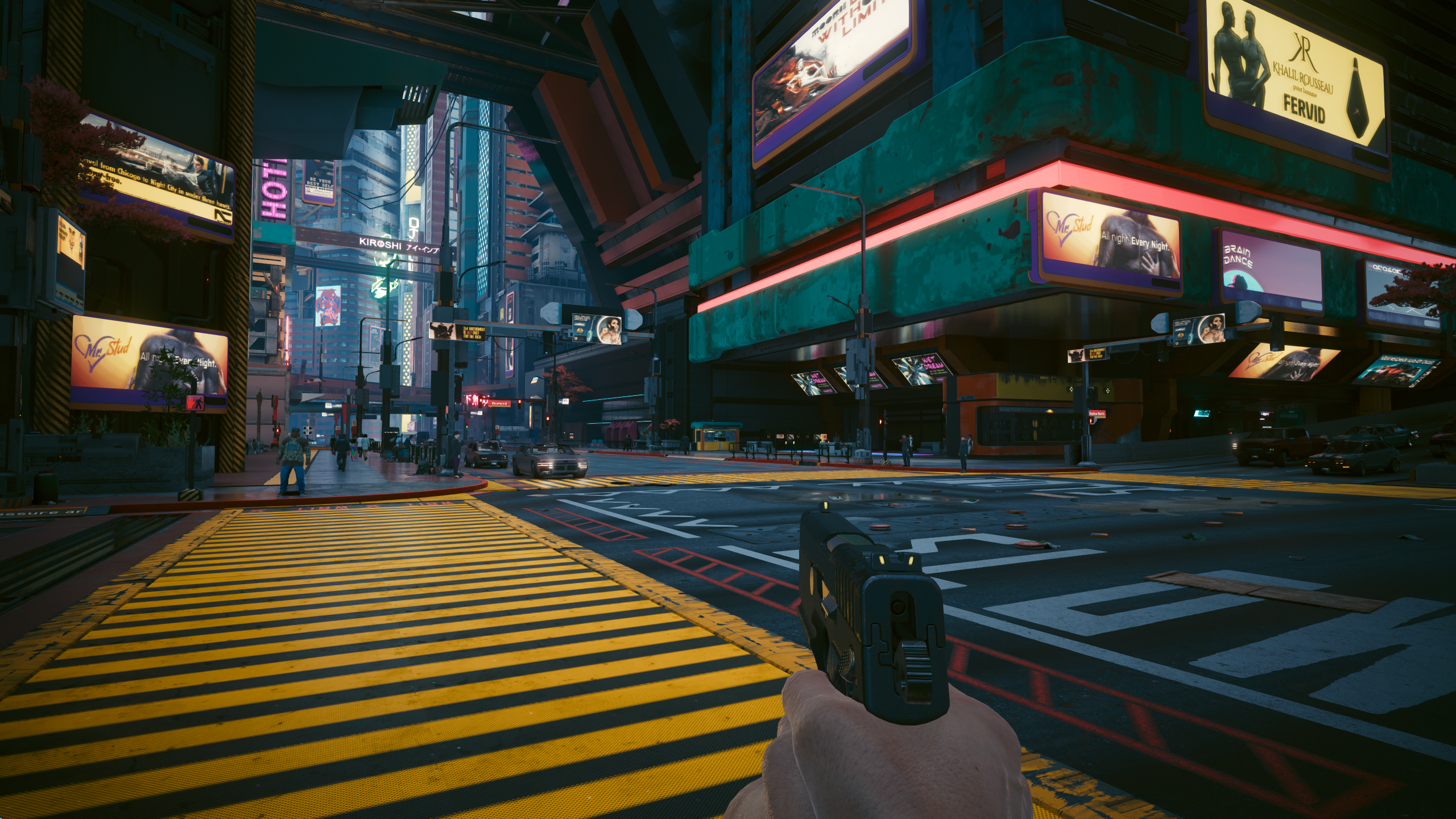
From the tower you venture off to a location to meet with Jackie who has a package that must be delivered to someone. There is a moment that you share, a sense of bonding where Jackie puts trust into you, and you into him. Together you travel to a checkpoint where you bribe a border patrol agent to get across the line only to be met with a couple of gun toting corpos.
A shootout occurs as Jackie drives your Nomad vehicle through this desert-based industrial area. This is the player’s first taste of police and corporate enforcement, telling you that not only are you not welcome in Night City, but that no one cares about you, about V, except for Jackie who is only thrown into this predicament. After a chase scene, you and Jackie open the contraband and decide to work together, solidifying this friendship.
The Corpo
My favorite background point of all three. While the Street kid and the Nomad starting points focus on this idea of family and being around others or breaking away from others, Corpo is all about isolation and subterfuge. While a gang and a band of misfits could be your family, the Corpo background tells you from the beginning that it is a dog eat dog world. You rise to the top of this incredibly dense ladder or you fall and become forgotten to time. Ultimately resulting in the obvious antithesis of the other stories- while the nomad presents the idea that you voluntarily left your family, the corpo background forcibly removes you from the timeline, saying that your relationships within the brutalist structure was absolutely conditional.
You start in a dark and drab office building that sits above the skyline, and you are in the midsts of a corporate scandal. Your manager calls you into a room and on your way there you see the black halls adorned with red neon lights. It is desolate, intimidating, and lacking any sort of vibrancy. It’s cold and intimidating. It’s so “streamlined” and “disruptive” that even your hud shows a ticker, displaying the constant flow of cash and stocks, details that are synonymous with the corporate lifestyle.
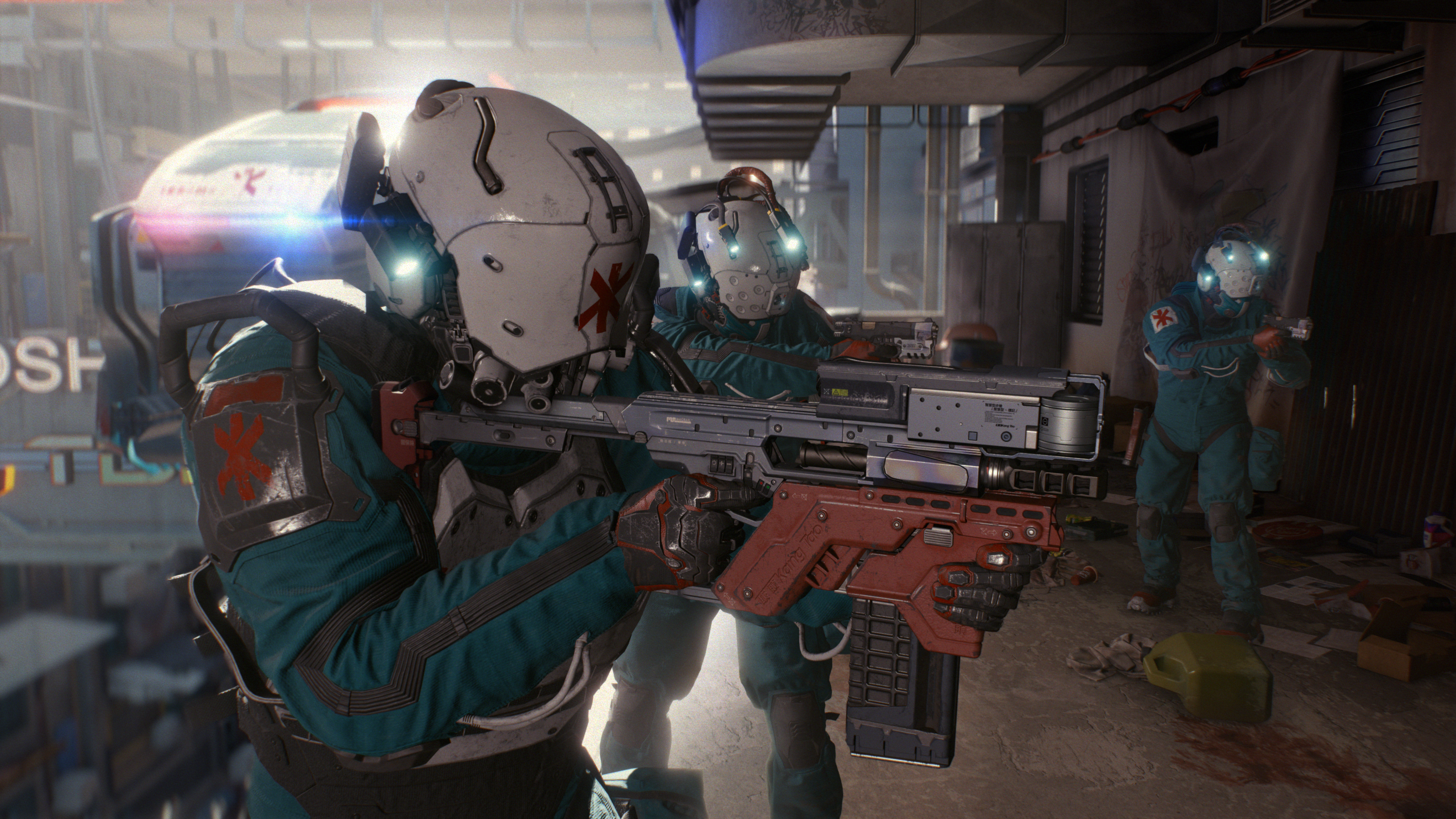
Walking into the room, you see a terrible event play out on a large video screen where several important people get their brains fried as a direct order of the manager that stands before you. His reaction to the event is nothing but callousness. It is just business. Another day in the life of a middle management corporate agent who doesn’t get paid enough to care, only to pull the trigger when needed.
He gives V a mission to take out another corporate goon, simply because he doesn’t want his hands dirty. As his subordinate, it is up to you to make it happen. So you meet with Jackie at Lizzy’s, a local bar. On the way there you take the private vehicle which is chromed out to the nines with every fancy detail. You get to see the city in a way that very few people do. When you touchdown in the middle of a basketball game, a player threatens you to which you respond with the cold “do you know who I am?” Take that could only be spoken as a true corporate fiend. Scenes like this really put the corporate sense of elitism at the center. The worst part is how the feeling doesn’t feel disgusting to you as the player, it’s just part of my background. You could, personally, disagree with the sentiment around it as a person removed from the experience, and in that case I agree with the innermost feelings of how vile this all feels, but I digress.

You meet with Jackie in one of the booths and as you share the details of the mission, a few other corporate suits come over and interject. They know what you are planning, they know the details and it is clear that you had a target on you this entire time. Everything about your corporate lifestyle has been taken from you, and Jackie makes the notion that you are no longer slave to a system, you are free. Free to explore Night City and become one of the best criminals to ever burn out.
Like the saying goes, you can take the person out of the corporation but you can’t take the corporation out of the person. This one background often comes with a lot of options to deploy your corporate knowledge in various situations. From the moment you meet with Meredith Stout to scaling Konpeki Plaza, knowledge becomes the utmost power.
The Culmination
As I previously noted, there are a few instances where the backgrounds play into the core gameplay. In some cases you’ll, be presented with the option to respond to a statement or question with this background option. The end result might not always be what we were expecting but it’s nice to get some of this additional flavor. It is a great immersive tool that continuously sends you back to your roots.
The theming of each background focuses on this concept of rebirth. Leaving your old life behind to achieve something greater. Once again, this is why the Corpo opening is something I really latch onto, because while the others have this more grounded approach to how Night City is bearing down upon the citizens inside and outside the confines of the neon covered concrete jungle, it’s the Corpo opening that gives you a taste of power. What is incredibly interesting is how this is the one opening that doesn’t resort to gun violence. Instead, we get a tense moment of negotiation between the player, Jackie, and the corpo goons who narrate your body’s failing systems.
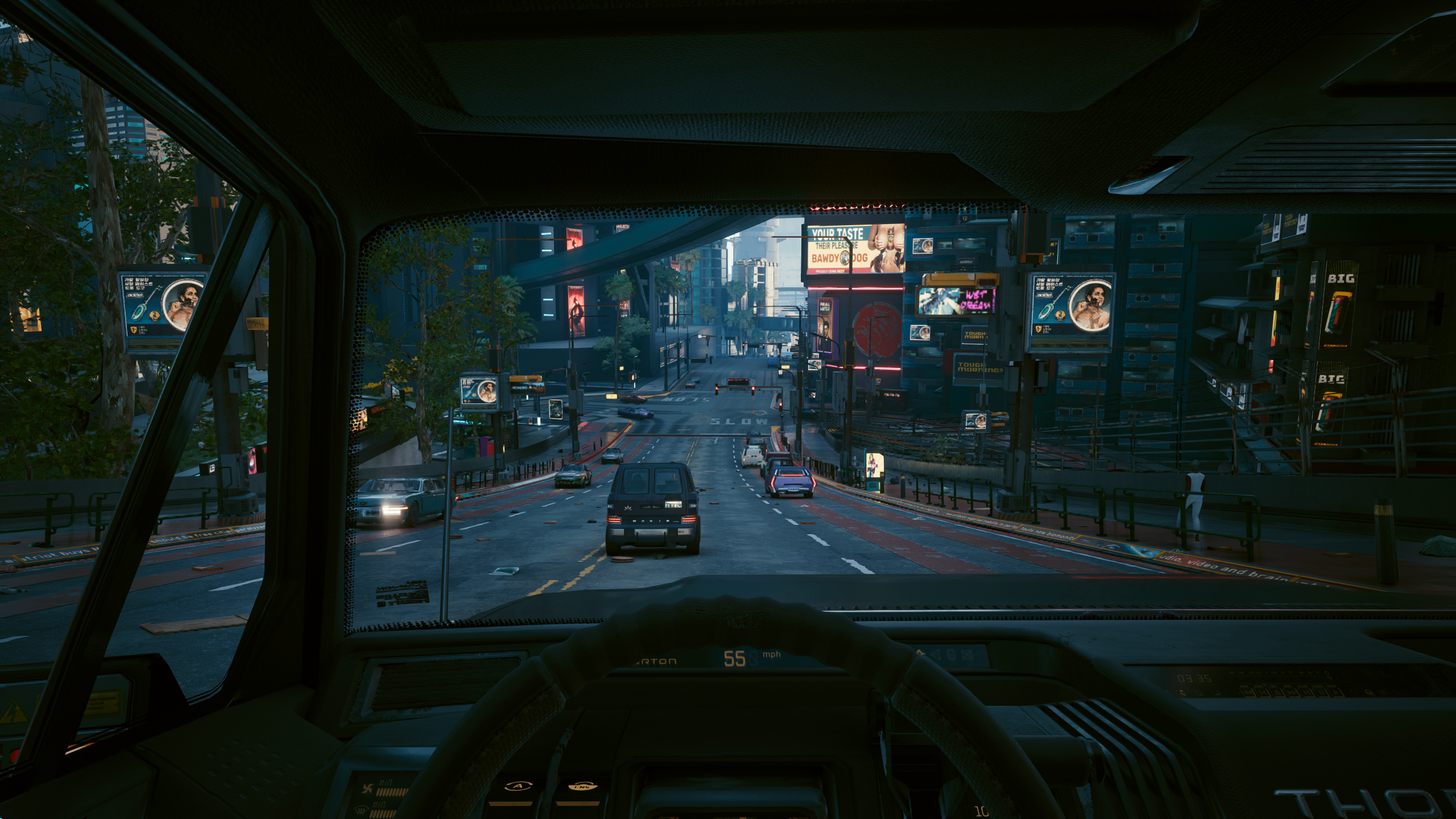
I also feel the corpo opening really lends itself to the rest of the story where you are struggling to fight off the corporate machine. This is only exasperated by the presence of Johnny Silverhand who hates corporates more than anything. As a previous agent, it almost feels like I have a devil on my shoulder the entire time. While devious, it sends a sense of solace knowing that despite getting thrown out of the corporate latter, I can still chip away at the rungs.
The most important part of all these backgrounds is the motivation behind each one. There is something there with each story that gives you the motivation to continue onward, to explore Night City and all the deviousness that is harnessed within the streets. Whether you are meandering around and helping a man fix his “robotically enhanced junk” to finding the killer in a Twin Peaks stylized narrative, CD Projekt RED gave players something intriguing to hold onto. There is something there within V other than Johnny Silverhand, and that is the urge to watch it all crumble.




 Common Loot
Leave a comment